
How to split bachelorette party costs
before anyone books a thing.
The usual way to split a bachelorette party is that guests divide the shared costs (lodging, group meals, activities and decorations) and also cover the bride's share, while each person pays their own travel. Send a per-person estimate before anyone commits, collect deposits before booking, and agree on a dropout policy in writing. This guide walks through each step with a worked example for eight guests.


Who usually pays for the bride
In many friend groups, the custom is that guests cover the bride's share of the shared costs: her bed in the rental, her dinner, her spot on the boat or the tour. The bride typically pays her own travel to get there, and anything personal like her own shopping or spa add-ons.
That's a custom, not a rule, and it varies a lot. Some brides insist on paying their own way, especially for a long destination trip. Some groups cover lodging and dinner but not the bride's flights. Some split the bride's share among the bridal party only, not every guest.
Whatever you choose, two things matter:
- Say it in the first cost estimate. Guests should know when they say yes that the per-person number includes a share of the bride.
- Ask the bride, privately. The maid of honor or organizer can check what she's comfortable with before the plan goes out. Some brides feel awkward having friends pay, and it's easier to adjust early.
Covering the bride doesn't add as much as people expect. In the example below, it adds about $61 per guest on top of a roughly $487 equal share.
Budget up front, before anyone commits
The single best thing an organizer can do is send a per-person cost estimate before asking who's in. People can say no to a number. It's much harder to back out once they've said yes and the house is booked.
A good estimate lists:
- Lodging: total cost and per-person share
- Planned group meals: a rough per-person figure including tax and tip
- Activities: each one with its price
- Decorations, supplies, matching shirts: a small shared pot
- The bride's share: spread across guests, if that's the plan
- Not included: flights, gas, personal drinks and shopping
Give a range if you're unsure, and lean high. Coming in under budget is a pleasant surprise. Coming in $150 over is how resentment starts.
Also offer a lighter option if the trip is expensive. Some guests may want to join for one night, or skip the pricey activity. Decide up front how that works so nobody has to ask.
Deposits and collecting money early
The organizer should never float thousands of dollars for weeks. Collect money in two rounds:
- Deposit when people commit. Enough to cover the lodging deposit and any non-refundable bookings. This also confirms who's actually coming.
- The balance a few weeks before the trip. Everything else, so the organizer isn't chasing payments during the party.
State plainly that deposits are non-refundable once bookings are made. It isn't harsh. It's the only way to protect the people who stay.
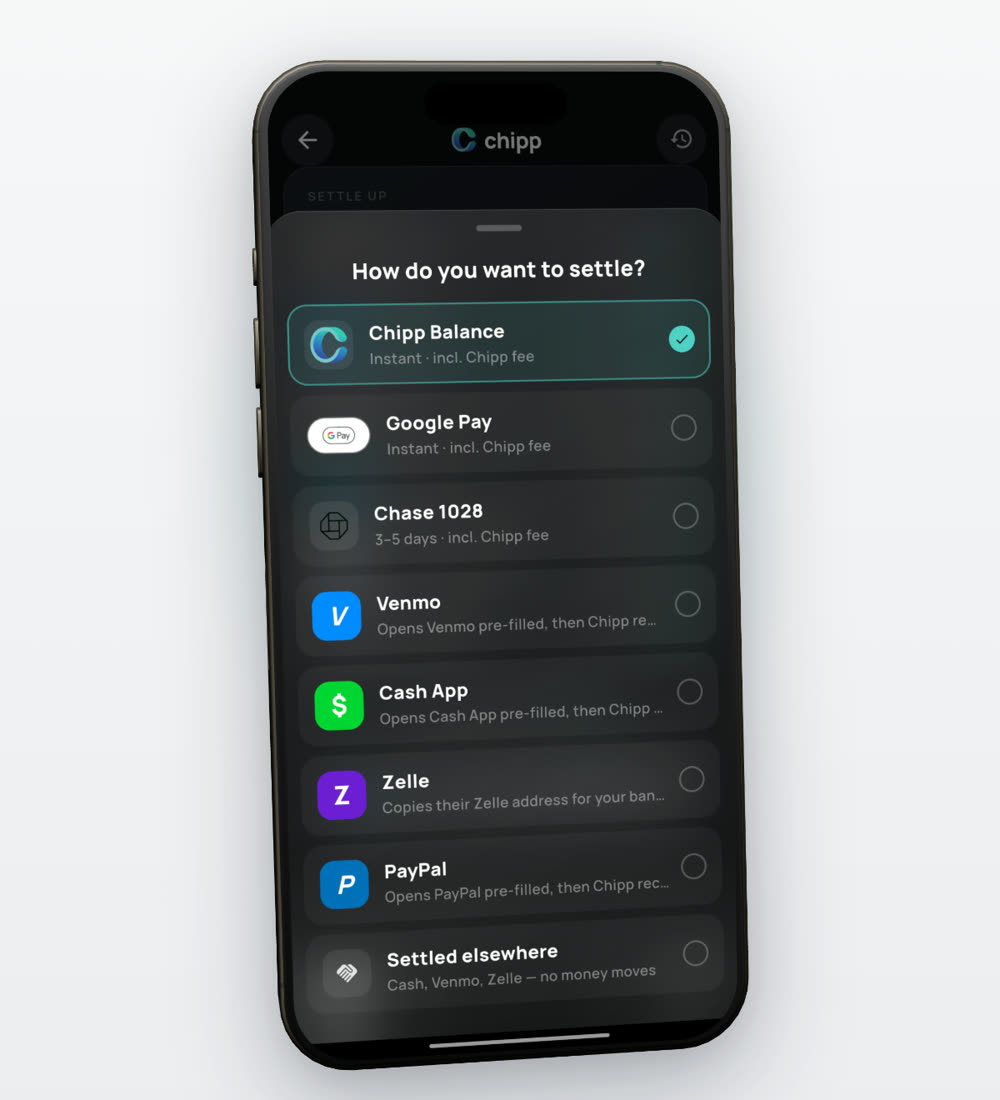
Keep everything in one place everyone can see. A shared group with each expense, who paid it and who owes what means nobody has to ask the organizer for a running total. In Chipp, you can make a group for the party, log each booking as it's paid, and send reminders and nudges to anyone who hasn't paid instead of writing those texts yourself. Guests can settle in one tap through Venmo, Cash App, Zelle, PayPal, bank, or Chipp Balance.
If a few people are late, a friendly, specific reminder works best. These scripts for asking a friend to pay you back adapt well to group trips.
Worked example: eight guests and a bride
Eight friends are throwing a two-night bachelorette weekend. The group agrees to cover the bride's share of everything shared. The costs:
- Rental house: $2,700 for two nights, sleeping all nine
- Group dinner: about $720 for nine, including tax and tip
- Boat tour: $80 per person, $720 for nine
- Decorations and supplies: $240
Total shared cost: $4,380.
If everyone including the bride paid an equal share, it would be $4,380 ÷ 9 = about $486.67 each. Because the eight guests are covering the bride, they split it eight ways instead:
- House: $2,700 ÷ 8 = $337.50
- Dinner: $720 ÷ 8 = $90.00
- Boat: $720 ÷ 8 = $90.00
- Supplies: $240 ÷ 8 = $30.00
- Per guest: $547.50
The bride's share adds $547.50 − $486.67 = about $60.83 per guest.
Collection schedule:
- 8 weeks out: $200 deposit from each guest. That's $1,600, enough to cover a 50% house deposit of $1,350.
- 3 weeks out: the remaining $347.50 from each guest.
Flights and personal spending stay out of it.
Handling dropouts
Someone will probably drop out. Decide in advance what happens, and put it in the first message.
Using the example above, say one guest drops out three weeks before, after paying her $200 deposit. The house is booked and non-refundable.
- Per-head costs shrink. Dinner and the boat tour are usually priced per person, so if you update the reservation, those totals drop by one person.
- Fixed costs don't. The house is still $2,700. Her lodging share was $337.50.
Three common ways to handle the gap:
- She pays her full lodging share because that was the agreed policy. Cleanest, but only fair if it was stated up front.
- She forfeits the deposit and the group absorbs the rest. Her $200 stays in the pot. The remaining $2,500 for the house is split among seven payers: about $357.14 each, or $19.64 more than before.
- She finds a replacement, if the bride is happy with that.
For real emergencies, most groups are flexible. The policy is there for the casual “actually, I can't make it” two weeks out, not for a family crisis.
A copy-paste message for the group
Send this once the plan is set. Adjust the numbers.
“Bachelorette plan for Lauren:
- Dates: March 13 to 15
- Estimated cost: about $550 per person, which includes the house, Saturday dinner, the boat tour, decorations, and covering Lauren's share. Flights not included.
- $200 deposit due by January 15 to hold your spot. Remaining balance due February 20.
- Deposits are non-refundable once we book. If you drop after that, you're responsible for your share of the house unless someone takes your spot.
- All costs will be in our group so you can see where every dollar goes.
Reply by Friday if you're in.”
What about bachelor parties?
The mechanics are the same: send a per-person estimate first, collect deposits before booking, keep one shared tracker, and agree on a dropout policy in writing.
Many groups follow the same custom of covering the groom's share of lodging, meals and activities, while the groom pays his own travel. Bachelor parties often lean more on individual activities, such as a round of golf, game tickets or a fishing charter, so splitting each activity only among the people who join it matters even more. A guest who skips the $150 golf round shouldn't pay for it.
For a full walkthrough with numbers, see how to split bachelor party costs. If the weekend is mostly a big rental, splitting an Airbnb with friends covers room-by-room splits.
Questions people ask
Does the bride pay for anything at her bachelorette party?
Usually she pays her own travel and personal spending, while guests split her share of lodging, group meals and activities. That's a common custom, not a rule. Some brides prefer to pay their own way, especially on expensive destination trips. The organizer should check privately with the bride and state the plan clearly in the first cost estimate.
How much does it cost to cover the bride's share?
Divide the bride's equal share of the shared costs by the number of paying guests. For a $4,380 weekend with nine people, her share is about $486.67. Spread across eight guests, that's about $60.83 each. The fewer guests there are, the more covering the bride adds per person, so include it in the estimate before people commit.
Should bachelorette party deposits be refundable?
Most organizers make deposits non-refundable once bookings are made, because the group is still on the hook for the house or reservation. Say so clearly before anyone pays. It's fair to offer a refund if someone finds a replacement, and most groups make exceptions for real emergencies rather than ordinary change-of-plans dropouts.
When should you collect money for a bachelorette party?
Collect a deposit when people commit, sized to cover the lodging deposit and any non-refundable bookings, then the remaining balance a few weeks before the trip. Collecting early means the organizer doesn't float large amounts on their card, and it confirms who's actually coming. Avoid collecting during the trip itself if you can.