
What to do when your roommate won't pay rent
calmly, one step at a time.
Start by checking the facts, then talk in person, follow up in writing, and offer a payment plan with real dates. Most rent problems end at one of those steps. If they don't, understand what your lease means for you, talk to the landlord early, and treat small claims court as a last resort. This guide walks through each step, with three message scripts you can copy.


Step 1: Check the facts before you say anything
Before you bring it up, make sure you know exactly what's owed and why. A calm, specific conversation is much easier when you're not guessing.
- The amount. Their share of rent, plus any utilities or other shared costs, and the dates each was due.
- The paper trail. Payment app history, bank transfers, texts where you agreed on shares. Did they maybe pay the landlord directly, or pay you in cash and you forgot?
- The lease. Whose names are on it, when rent is due, what the late fee is, and whether it says tenants are "jointly and severally" liable. That wording usually means each tenant can be held responsible for the whole rent, not just their share.
- Any agreement between you. A roommate agreement or even an old text thread about who pays what.
- The pattern. Is this the first time, or the third month in a row? A one-off and a habit call for different responses.
Write the numbers down in one place. You'll use them in every step that follows.
Step 2: Talk in person, early
Raise it within a day or two of the missed payment, not after it has built up for months. Pick a private, unhurried moment, not when they're walking out the door.
- Ask before you assume. "Is everything okay?" opens more doors than "You didn't pay." People who stop paying rent are often dealing with a lost job, a late paycheck or a family emergency, and they're embarrassed.
- Be specific. Name the amount and the date: "Your share was $950, due on the 1st."
- Say what you need. "I need to know when you can pay so I can sort out the landlord."
- Listen, then agree on a next step. A date, a partial payment, or a plan. Don't leave the conversation with nothing decided.
If you covered their share to avoid a late fee, say so plainly. It turns a vague debt into a clear loan from you.
Step 3: Follow up in writing
Even after a good conversation, send a short written follow-up. It confirms what you agreed and creates a record if you ever need one. Keep it friendly and factual. Three scripts, from gentle to firm:
1. The friendly reminder (right after the conversation)
"Hey, thanks for talking earlier. Just confirming: your share of October rent was $950, I covered it on the 1st, and you said you can pay me back by the 15th. Let me know if anything changes."
2. The firm follow-up (a payment date has passed)
"Hi, the $950 for October rent was due back to me on the 15th and I haven't received it. Can you send it by Friday, or tell me what you can pay now and when the rest will come? I need to sort this out before November rent is due."
3. The final notice (before you involve anyone else)
"I've reached out a few times about the $950 for October rent. I need it settled, or a written payment plan agreed, by the 30th. If not, I'll need to talk to the landlord about the lease and look at other options to recover it. I'd much rather sort it out between us."
Send messages in writing rather than only by phone, and keep them. If the conversation ever moves to the landlord or a court, a clear, polite record is the most useful thing you can have. For more wording ideas, see how to remind someone they owe you money.
Step 4: Agree on a payment plan
If your roommate genuinely can't pay it all at once, a plan with dates usually works better than waiting for a lump sum that never comes.
A worked example: Jordan owes $950 for October, which you covered. Jordan is paid on the 15th and 30th. You agree:
- November rent is paid in full and on time first. The plan never comes at the expense of the next month.
- $350 on October 30th.
- $300 on November 15th.
- $300 on November 30th.
That clears the $950 in a month and a half. Write it down and have both of you confirm it in a text. Track each payment against the balance as it comes in, so neither of you has to remember what's left.
If a plan payment is missed, don't renegotiate from scratch. Point back to the plan you both agreed and ask what's changed.
What the lease means for you and the landlord
This part depends heavily on your lease and where you live, so treat it as general information, not legal advice.
- Joint leases. If you're both on the lease, many leases make every tenant responsible for the full rent. If your roommate's share goes unpaid, the landlord may be able to collect it from you, and late fees and any eviction filing can affect everyone on the lease.
- Covering the gap. Many people pay the missing share to protect their own housing and rental history, then recover it from the roommate. If you do, record it clearly as money they owe you.
- Talking to the landlord. Landlords generally prefer hearing about a problem early to finding out when rent bounces. Some will agree to a short delay or allow a replacement roommate.
- If you're the leaseholder and they're your subtenant, the rules for ending their stay can be different. Look up your local rules.
- What not to do. Don't change the locks, remove their belongings, or shut off utilities to force them out. Doing that is generally not allowed, even if they owe you money, and can cause you legal trouble.
A local tenant-rights organization or legal aid office can tell you how the rules work where you live. If your roommate wants out altogether, the moving-out-early guide covers what usually happens next.
Small claims court, as a last resort
If talking, writing and a payment plan have all failed, small claims court is designed for disputes like this: modest amounts, no lawyer required, simple filing. The dollar limits, filing fees and procedures vary by state, so check your local court's website before you start.
Before filing, most people send a short written demand: the amount owed, how it was calculated, and a deadline to pay. Sometimes that alone gets results.
If you do file, bring:
- The lease and any roommate agreement
- A clear list of amounts owed and dates
- Payment records showing what you covered and what was repaid
- Your written messages, including any payment plan they agreed to
Be realistic. Winning a judgment doesn't guarantee you'll be paid, and suing someone you live with will change the relationship. It's a tool for when the money matters more than the friendship.
How to prevent it next time
Most unpaid-rent problems start small and grow because nobody wanted to bring it up. A few habits make it much less likely:
- Put the agreement in writing. Shares, due dates, what happens if someone is late, and what happens if someone leaves early.
- Set a "pay by" date before rent is due. If rent is due on the 1st, ask for shares by the 28th. That gives you a few days to sort out a problem before it becomes a late fee.
- Keep one shared tracker. When rent and bills are recorded in one place everyone can see, a missed payment is visible to the whole household, not just the person who's out of pocket.
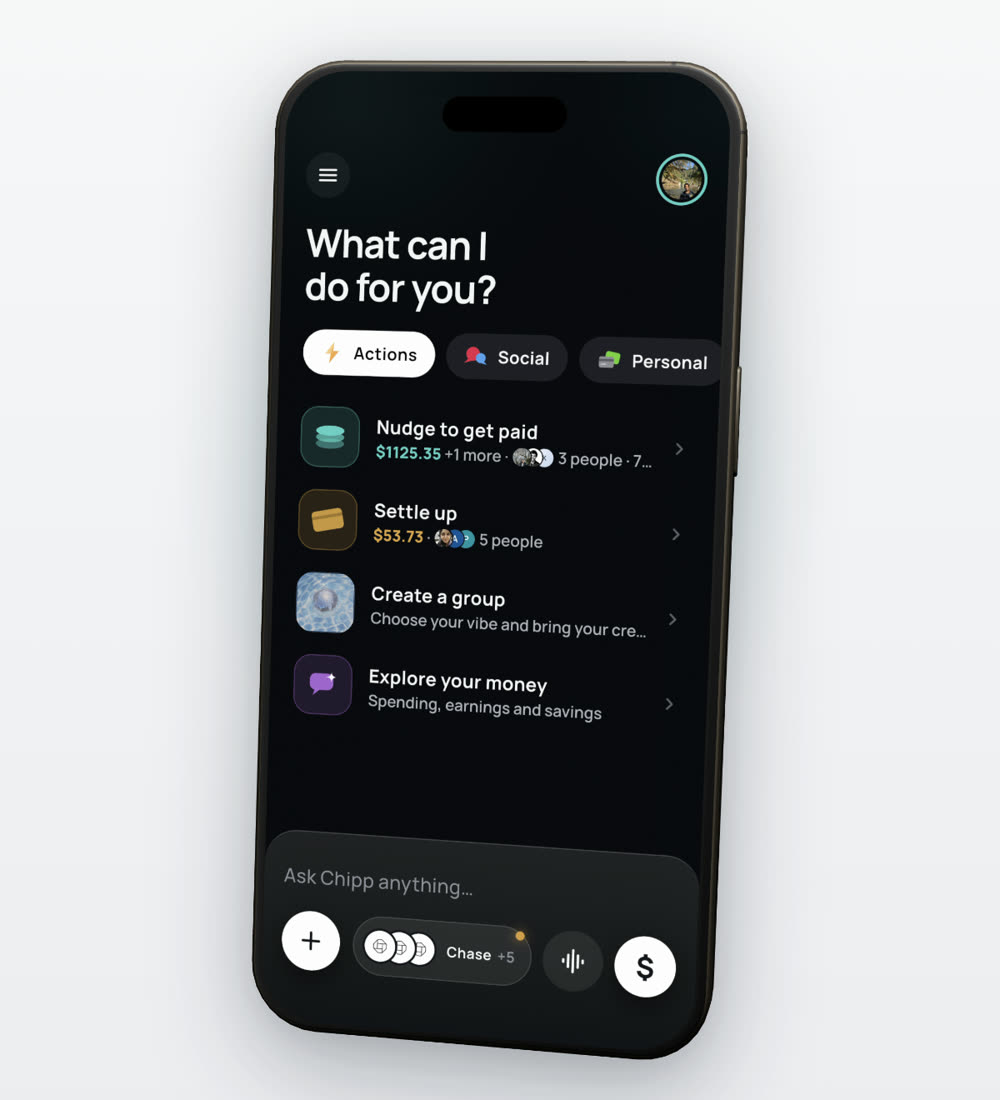
- Let reminders do the asking. In Chipp, rent can be set up as a recurring monthly expense (Chipp+), everyone sees their balance, and nudges go out automatically, so you're not the one sending the awkward text. When it's time to pay, it's one tap through Venmo, Cash App, Zelle, PayPal or their bank.
- Talk about money before move-in. Ask a new roommate how they plan to cover rent, and agree on what happens if their situation changes.
Questions people ask
What can I do if my roommate won't pay their share of rent?
Check exactly what's owed, then talk to them in person and follow up in writing with the amount and a date. If they can't pay at once, agree on a written payment plan. If that fails, talk to your landlord early about the lease, and consider small claims court as a last resort. Keep records of every payment and message.
Am I responsible for my roommate's rent?
It depends on your lease. If you're both on the same lease, many leases make each tenant responsible for the full rent, so the landlord may be able to collect an unpaid share from you. If you're on separate leases or your roommate subleases from you, it can work differently. Check your lease and local rules; this is general information, not legal advice.
Can I kick out a roommate who doesn't pay rent?
Usually not on your own. If they're on the lease, removing them generally involves the landlord and a formal legal process. Even if they aren't, most places require proper notice and legal steps. Changing locks or removing their things is generally not allowed. A local tenant-rights organization can explain the rules where you live.
Can I take my roommate to small claims court for unpaid rent?
Often, yes. Small claims court handles modest money disputes without a lawyer, though limits and fees vary by state. Bring the lease, any roommate agreement, payment records and your written messages. Many people send a written demand first, which sometimes settles it. A judgment doesn't guarantee payment, so treat court as a last resort.